car moving


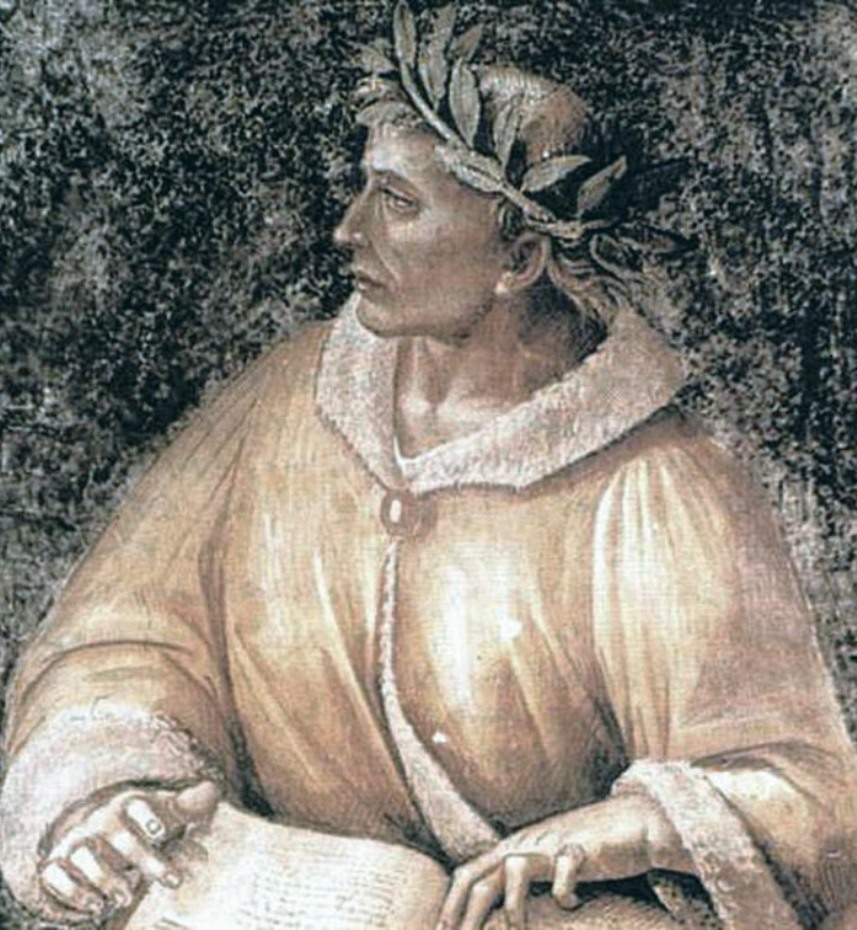
Publius Ovidius Naso, known as Ovidius (Ovid), was an ancient Roman poet who lived during the reign of Emperor Augustus.
Most of the information about the life and work of Ovid, scholars have drawn from his own works, as well as from the works of Seneca the Elder and Marcus Fabius Quintilianus. Ovid was from a fairly high class of "horsemen", studied rhetoric at the maestros of oratory of the ancient Roman Empire, and then went traveling, visiting Athens, Asia Minor and Sicily. As a young man, Ovid held minor public offices, was a member of the college of civil affairs, and served in an office that performed spiritual and secular duties at the state level.
However, Ovid was much more attracted to poetry, and he resigned and about 29-25 BC joined the circle of those chosen under the patronage of Marcus Valerius Messala Corvinus. After publishing Amores, a collection of love-erotic lyrics, around 15-16 BC, Ovid became one of Rome's most popular poets. He became famous for his works in the genre of elegy, as well as for his epic poem Metamorphoses (8 AD), which became one of the most important sources in the study of classical mythology.
For reasons unknown to us, in 8 A.D. Ovid was disgraced and exiled for the rest of his life to Tomes on the Black Sea, where he wrote his "Mournful Elegies" and a poem cycle entitled "Letters from Pontus". A contemporary of Virgil and Horace, Ovid was one of the three canonical representatives of Latin literature.



Caroline Walker is a Scottish-born contemporary visual artist based in London. She is known for voyeuristic paintings of women working.

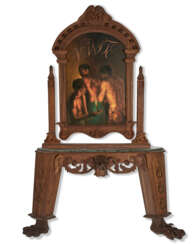


Los Carpinteros is a Cuban artist collective founded in Havana in 1992 by Marco Antonio Castillo Valdes, Dagoberto Rodriguez Sanchez, and Alexandre Arrechea (who left the group in 2003).
In their work the artists incorporate aspects of architecture, design and sculpture to create installations and drawings that “negotiate the space between the functional and the nonfunctional", where they derive their “inspiration from the physical world” and express their interest in the intersection of art and society in a humorous manner. Los Carpinteros create a response to places, spaces and objects, how they have been conceived, built, used and abandoned.



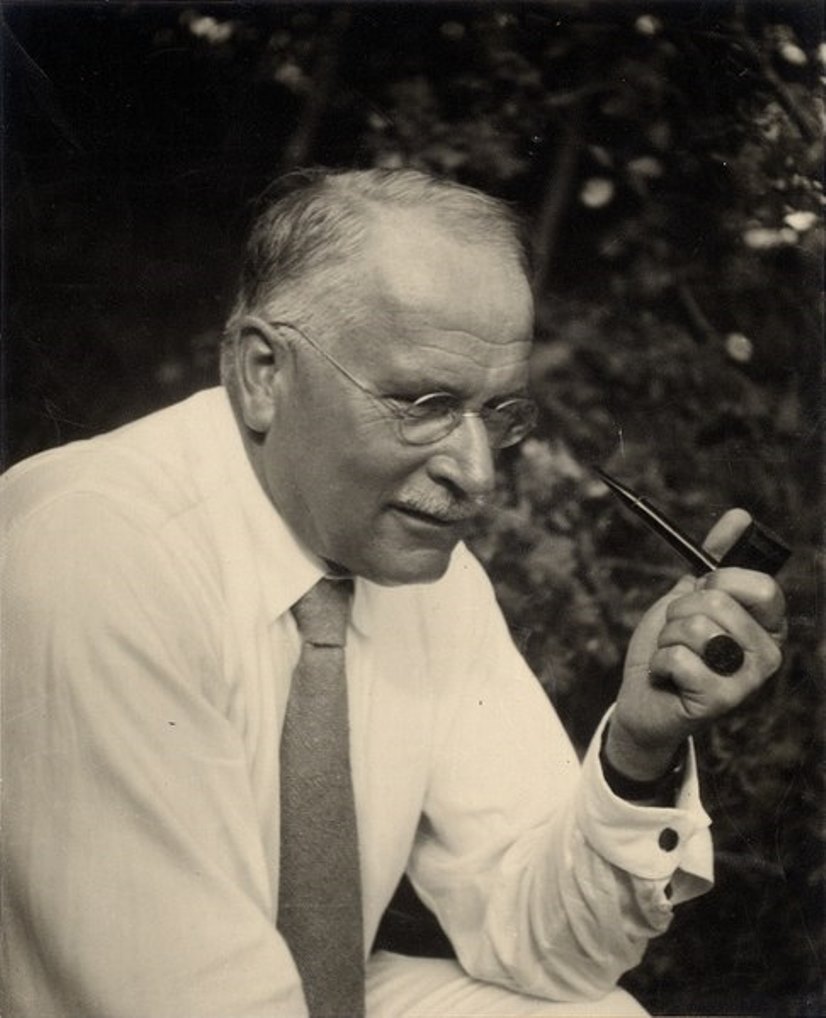
Carl Gustav Jung was a Swiss psychologist and psychiatrist, professor, and the founder of analytical psychology.
He studied at the University of Zurich and conducted many studies in scientific psychology and psychiatry. From 1907 to 1912, Jung was a close associate of Sigmund Freud, but later they had serious disagreements and parted ways.
Carl Jung proposed and developed the concepts of extraverted and introverted personality, archetypes and the collective unconscious. He introduced the term "collective unconscious" as a part of the mind containing memories and impulses of which the individual is unaware, common to humanity as a whole and deriving from inherited brain structure. It differs from the personal unconscious, which arises from the experience of the individual. According to Jung, the collective unconscious contains archetypes, or universal primordial images and ideas.
Historical research helped Jung pioneer psychotherapy for middle-aged and elderly people, especially those who felt their lives had lost meaning. He helped them appreciate the place of their lives in the sequence of history. Jung devoted many years of his life to developing his ideas, especially those concerning the relationship between psychology and religion. His work had a significant impact on psychiatry and the study of religion, literature, and related fields.
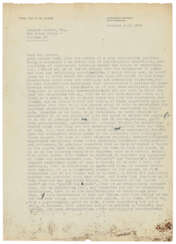

Carl Gustav Jung was a Swiss psychologist and psychiatrist, professor, and the founder of analytical psychology.
He studied at the University of Zurich and conducted many studies in scientific psychology and psychiatry. From 1907 to 1912, Jung was a close associate of Sigmund Freud, but later they had serious disagreements and parted ways.
Carl Jung proposed and developed the concepts of extraverted and introverted personality, archetypes and the collective unconscious. He introduced the term "collective unconscious" as a part of the mind containing memories and impulses of which the individual is unaware, common to humanity as a whole and deriving from inherited brain structure. It differs from the personal unconscious, which arises from the experience of the individual. According to Jung, the collective unconscious contains archetypes, or universal primordial images and ideas.
Historical research helped Jung pioneer psychotherapy for middle-aged and elderly people, especially those who felt their lives had lost meaning. He helped them appreciate the place of their lives in the sequence of history. Jung devoted many years of his life to developing his ideas, especially those concerning the relationship between psychology and religion. His work had a significant impact on psychiatry and the study of religion, literature, and related fields.
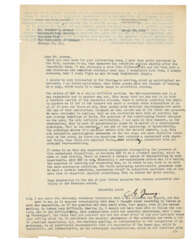

Carl Gustav Jung was a Swiss psychologist and psychiatrist, professor, and the founder of analytical psychology.
He studied at the University of Zurich and conducted many studies in scientific psychology and psychiatry. From 1907 to 1912, Jung was a close associate of Sigmund Freud, but later they had serious disagreements and parted ways.
Carl Jung proposed and developed the concepts of extraverted and introverted personality, archetypes and the collective unconscious. He introduced the term "collective unconscious" as a part of the mind containing memories and impulses of which the individual is unaware, common to humanity as a whole and deriving from inherited brain structure. It differs from the personal unconscious, which arises from the experience of the individual. According to Jung, the collective unconscious contains archetypes, or universal primordial images and ideas.
Historical research helped Jung pioneer psychotherapy for middle-aged and elderly people, especially those who felt their lives had lost meaning. He helped them appreciate the place of their lives in the sequence of history. Jung devoted many years of his life to developing his ideas, especially those concerning the relationship between psychology and religion. His work had a significant impact on psychiatry and the study of religion, literature, and related fields.
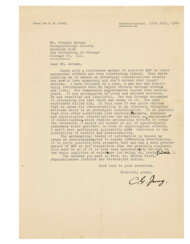

Carl Gustav Jung was a Swiss psychologist and psychiatrist, professor, and the founder of analytical psychology.
He studied at the University of Zurich and conducted many studies in scientific psychology and psychiatry. From 1907 to 1912, Jung was a close associate of Sigmund Freud, but later they had serious disagreements and parted ways.
Carl Jung proposed and developed the concepts of extraverted and introverted personality, archetypes and the collective unconscious. He introduced the term "collective unconscious" as a part of the mind containing memories and impulses of which the individual is unaware, common to humanity as a whole and deriving from inherited brain structure. It differs from the personal unconscious, which arises from the experience of the individual. According to Jung, the collective unconscious contains archetypes, or universal primordial images and ideas.
Historical research helped Jung pioneer psychotherapy for middle-aged and elderly people, especially those who felt their lives had lost meaning. He helped them appreciate the place of their lives in the sequence of history. Jung devoted many years of his life to developing his ideas, especially those concerning the relationship between psychology and religion. His work had a significant impact on psychiatry and the study of religion, literature, and related fields.
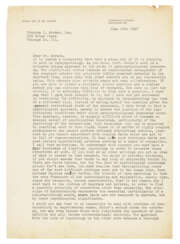

Carl Gustav Jung was a Swiss psychologist and psychiatrist, professor, and the founder of analytical psychology.
He studied at the University of Zurich and conducted many studies in scientific psychology and psychiatry. From 1907 to 1912, Jung was a close associate of Sigmund Freud, but later they had serious disagreements and parted ways.
Carl Jung proposed and developed the concepts of extraverted and introverted personality, archetypes and the collective unconscious. He introduced the term "collective unconscious" as a part of the mind containing memories and impulses of which the individual is unaware, common to humanity as a whole and deriving from inherited brain structure. It differs from the personal unconscious, which arises from the experience of the individual. According to Jung, the collective unconscious contains archetypes, or universal primordial images and ideas.
Historical research helped Jung pioneer psychotherapy for middle-aged and elderly people, especially those who felt their lives had lost meaning. He helped them appreciate the place of their lives in the sequence of history. Jung devoted many years of his life to developing his ideas, especially those concerning the relationship between psychology and religion. His work had a significant impact on psychiatry and the study of religion, literature, and related fields.
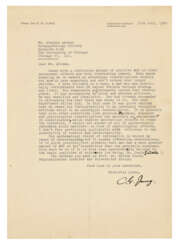

Carl Gustav Jung was a Swiss psychologist and psychiatrist, professor, and the founder of analytical psychology.
He studied at the University of Zurich and conducted many studies in scientific psychology and psychiatry. From 1907 to 1912, Jung was a close associate of Sigmund Freud, but later they had serious disagreements and parted ways.
Carl Jung proposed and developed the concepts of extraverted and introverted personality, archetypes and the collective unconscious. He introduced the term "collective unconscious" as a part of the mind containing memories and impulses of which the individual is unaware, common to humanity as a whole and deriving from inherited brain structure. It differs from the personal unconscious, which arises from the experience of the individual. According to Jung, the collective unconscious contains archetypes, or universal primordial images and ideas.
Historical research helped Jung pioneer psychotherapy for middle-aged and elderly people, especially those who felt their lives had lost meaning. He helped them appreciate the place of their lives in the sequence of history. Jung devoted many years of his life to developing his ideas, especially those concerning the relationship between psychology and religion. His work had a significant impact on psychiatry and the study of religion, literature, and related fields.


















Charles Fazzino is an American pop artist, known for his silkscreen serigraphs in a 3D pop art style. His artwork incorporates influence from urban landscapes, sporting events, and modern celebrities. As described in the book about Fazzino titled The Master of 3-D Pop Art, "An innovative and imaginative storyteller, Charles Fazzino serves up a bevy of details in his unique three-dimensional creations. His collectors marvel as much at his ability to capture the entire essence of his subject matter in one statement, as they do at his use of vibrant colors, his whimsical sense of humor, and his hand-assembled multi-layered artistic style. Although, the snappy titled often gives a clue to the content of each painting, it can take years of careful observation to discern all of the details in a single Fazzino image. One of Fazzino's greatest joys is to observe visitors at exhibition of his work. 'I love to watch the smiles form as people begin to recognize elements of my paintings,' comments Fazzino. 'They point at the images as if inserting themselves into the stories. I watch that and I'm reminded of why i paint. It's all about celebrating the joy and fun we have as human beings on this planet."